Liveasy
Redesigning a logisticshomepage to look modernand feel trustworthy.
During my first internship at Nexus Info,I was given a task to redesign Liveasy.
Liveasy - a logistics company, had a landingpage that was dated and didn’t make the impact.
No proper information hierarchy.No credibility. Everything, everywhere.
Sat with it, found real problems andredesigned it on my design pillars.
Understanding why the redesignwas necessary.
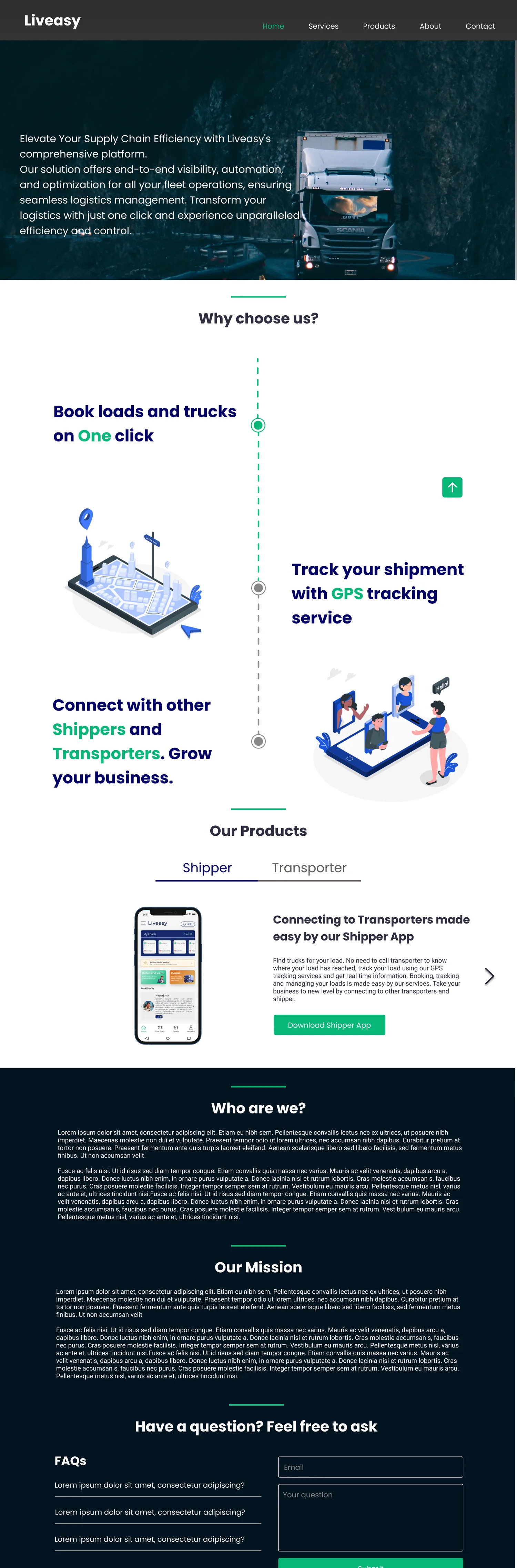
Information scattered with no realhierarchy. Just walls of texts.
No logos, no proof, no credibilityelements that earns the trust ofclients.
No proper placement of CTAs. Theyare randomly placed.
Outdated UI. The interface looked likeit had been abandoned, notmaintained.
Design Pillars
I researched and learned whatmakes a website good.
Clarity beforeaesthetics.
If a buyer can’t tell what Liveasy does in three seconds, nothing else on the page gets a chance to matter.
Proof before pitch.
Logos, numbers and real evidence come before a single feature. Earn the trust, then make the case.
One path, not four.
Every section points to the same next step. No competing buttons, no wandering.
Outcomes overfeatures.
Don’t say what it does. Say what it gets you. "Fleet tracking" means nothing; "know where every truck is" sells.
Redesigning Liveasy, not just fora better look but for a betterbusiness.
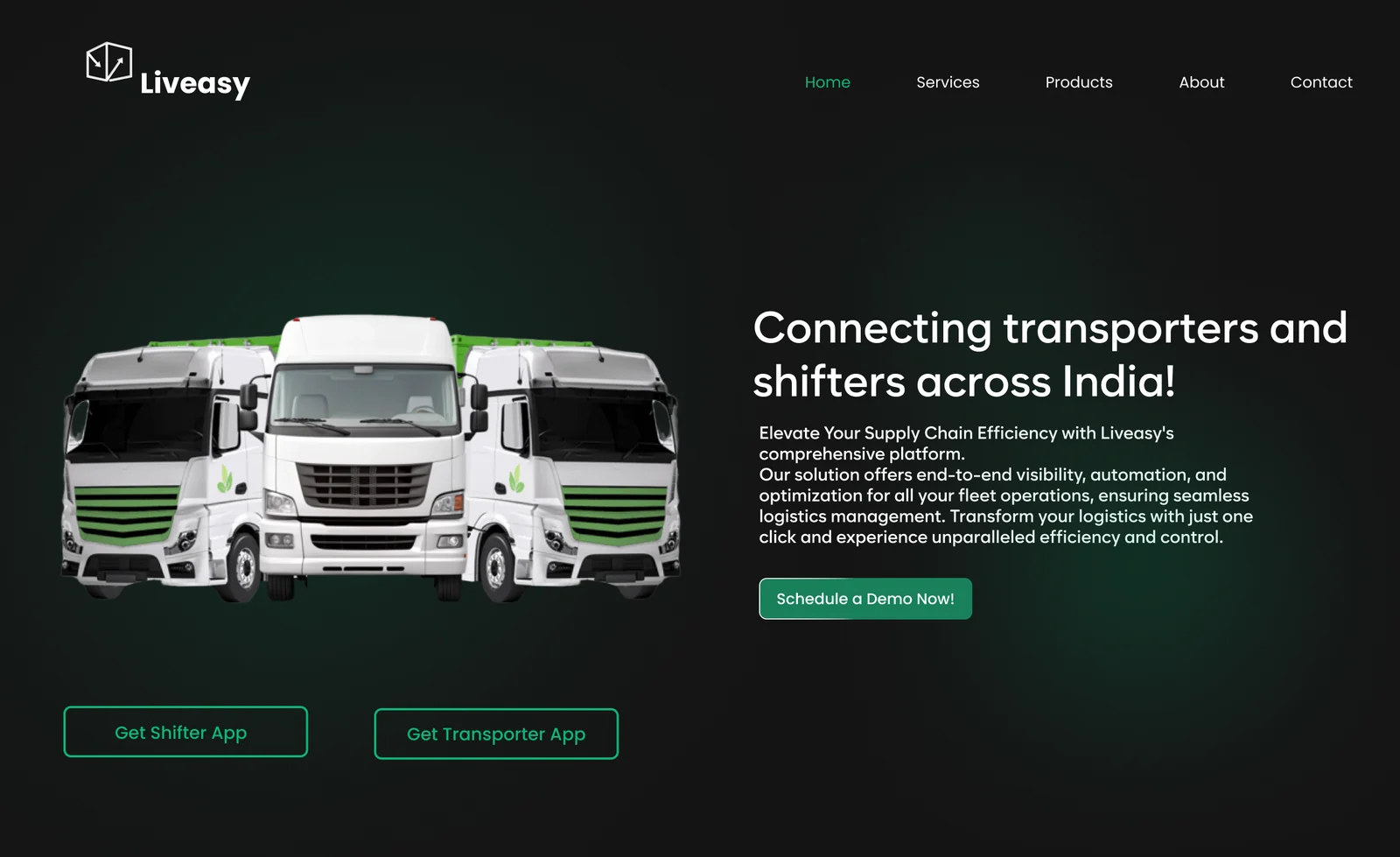
Clarity before aesthetics.
Setting the first impression with modern and clean visual appeal, with direct CTAs.
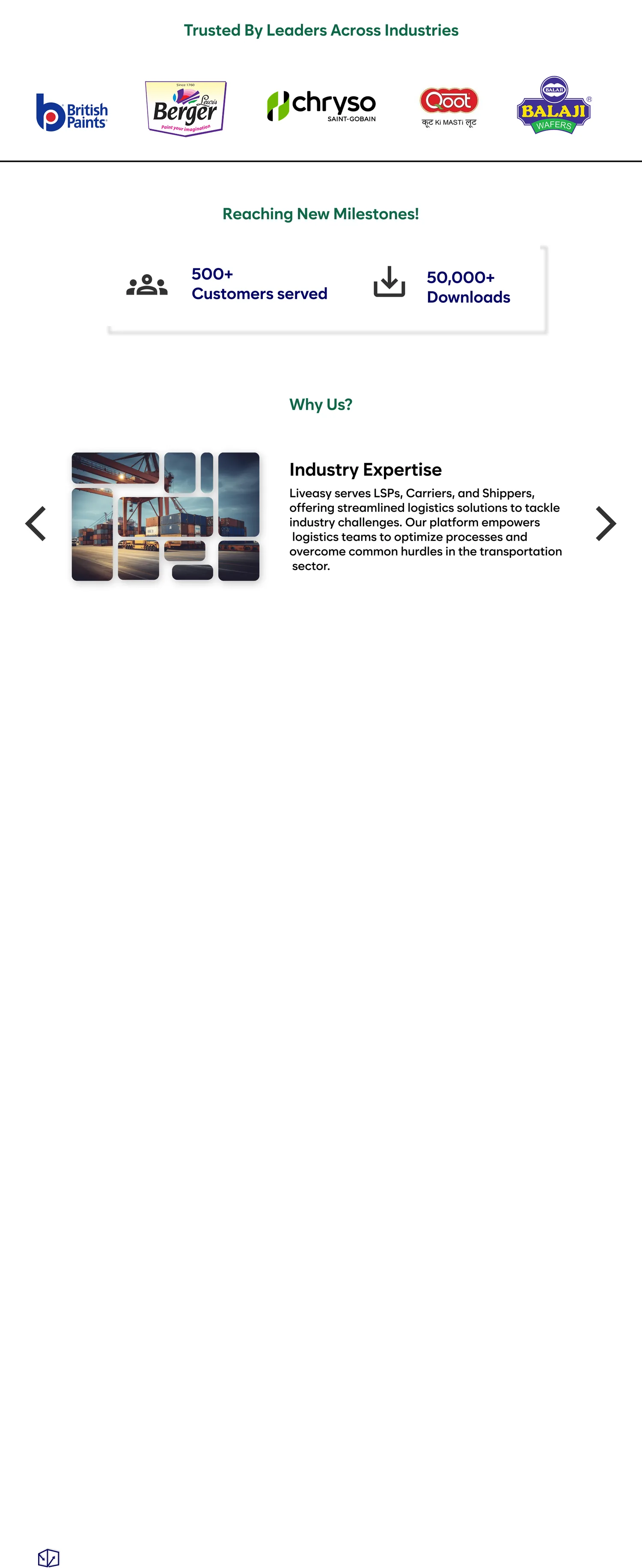
Proof before pitch.
Proper credibility elements placed to earn trust before the page asks for anything.
Outcomes over features.
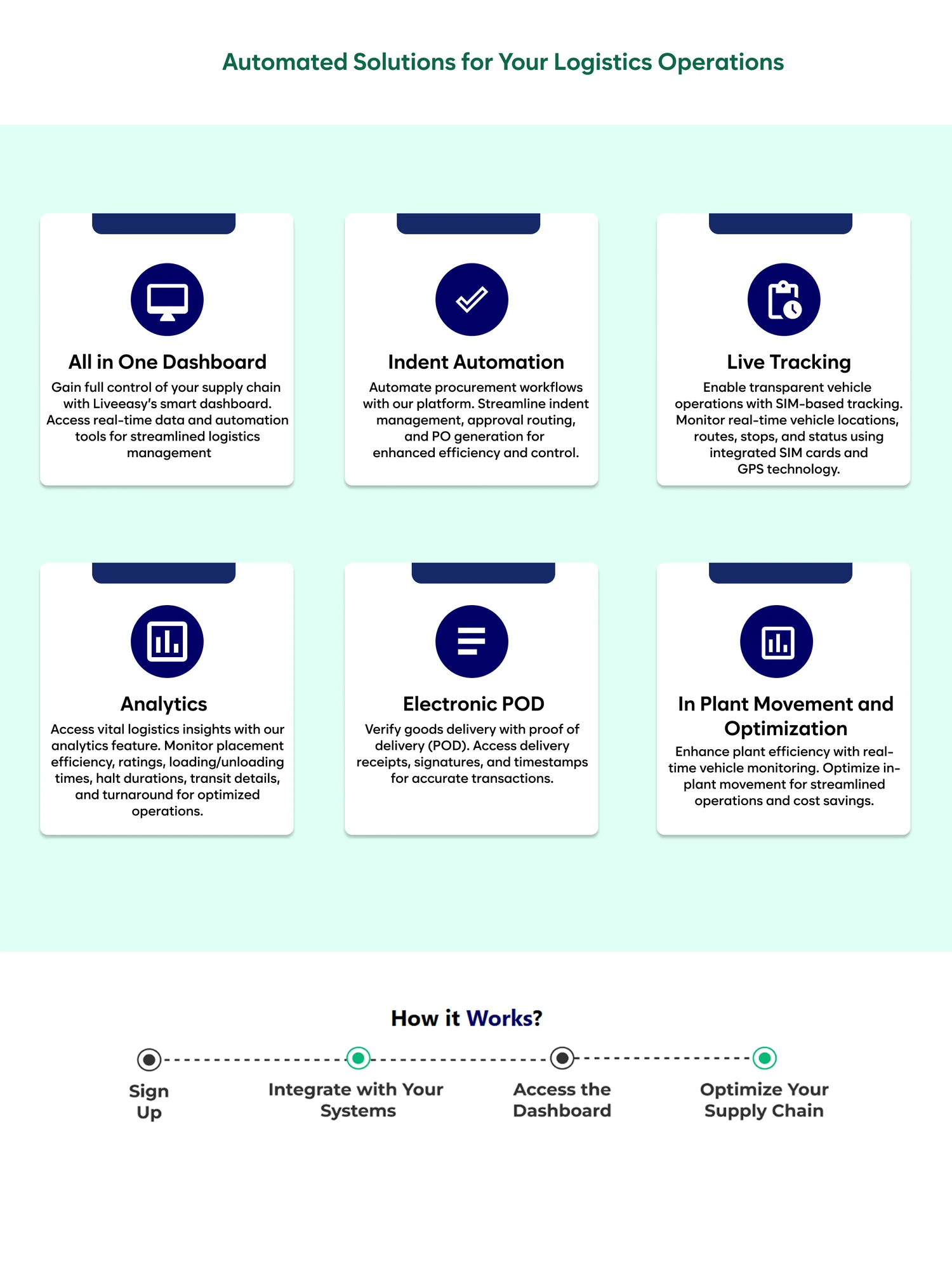
Instead of overwhelming users, features were organized to highlight practical outcomes.
Learnings
What my first internshiptaught me.
Six weeks, six pages, and lessons I’ve used on every project since.
Look current orlook gone.
In a fast-moving industry, an outdated site reads as a company that might not be around next quarter. A modern look turned out to be part of the trust, not separate from it.
Don’t let peoplewander.
Four competing buttons meant no decision at all. One clear path, repeated through the page, did more for conversion than any visual change.
Decoding the feedbackis part of my job.
I’d get notes like "add a circle here" or "make it pop." Doing it literally never worked. Figuring out what was actually bothering them (balance, focus, hierarchy) almost always led to a better fix than the one they asked for.
FAQ
Questions I getabout this one.
What was your role on the team?
UI design intern at Nexus Info, and the homepage redesign was mine end to end - the research, the pillars, and every screen.
Was this your first real project?
Yes. Six weeks, six pages, and the first time my work was going in front of somebody’s actual customers rather than a class.
What would you do differently now?
Put it in front of people sooner. I argued the pillars from research and judgement, which held up - but I would rather have had a real buyer tell me than be right on paper.
Check out myother work.

Like my work?Get in contact.